
A guide to choosing the right fishing float for beginners

A Guide to Choosing a Six-Hook Float for Beginners

Wave-resistant float with a slender, elongated body that rides the waves well and casts far
For experienced anglers, choosing a float is second nature; simply by assessing the distance to the fishing spot, they can easily estimate which type of float and what size to use – it’s really straightforward. However, for novice anglers, the issue is far more challenging, as the distance to the fishing spot and water depth directly affect both the rod and the float.
According to the experience of professional anglers, there are two ways to choose a float for six-hook rigs, as follows:
1. Selecting a float based on distance
- If you’re fishing near the bank (at the tip of the rod) at a distance of 10 to 25 metres, you should use a float size 18 to 24.
- If you wish to fish further out and in deeper water, with a rod length of 25 to 50 metres, choose a float size ranging from 24 to 28.
- For fishing at distances of 50 to 100 metres, you should use floats ranging from size 28 to 34 and upwards.
A small tip for you all: when fishing at a distance, you should cast the float as far away from the fishing spot as possible; this will help prevent disturbing the fish.

It may sound crude, but it’s true: the floats from Tuấn Kiệt Shop are absolutely stunning, float up quickly and hold their position well in the waves.
2. Choosing a float based on rod type
Before making your choice, remember this: the softer the rod, the smaller and lighter the float should be.
- When choosing a flexible rod (hardness D, E – equivalent to T25 or T27), you should opt for a small, rounded float of around 15–22; these rods are suited to top-water fishing, so a small float is sufficient.
- If using a moderately flexible rod (hardness C, or equivalent to T3), you should only use a small, rounded float of around 20–26; this is also a rod suited to fishing near the tip or at medium distances of up to 40 metres.
- When fishing 50–100 metres from the shore, using a rod with a stiffness rating of B (T33) or A (T35), floats of 28–32 or 34 are typically used, as stiffer rods require heavier floats and lines to cast further; furthermore, to reach the fish, the float must be heavy enough to stay afloat and keep the hook pointing straight up.

Lemon-yellow floats remain a popular choice
3. Day and night float fishing
There are currently two types of float rigs; you need to understand the differences between day and night float rigs to use them most effectively.
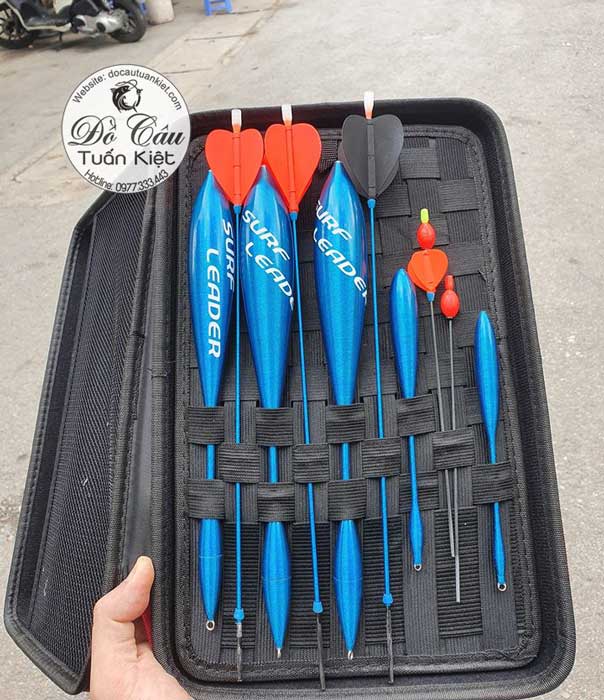
a. Day floats
In terms of construction, the head of a day float should have a small float chamber. This chamber serves two main purposes: to signal a bite and to stabilise against waves (when needed).
This type also features a float rod and a short float leg. The float is only 8–12 cm long. A small tip: you should choose a type with a light and flexible float leg.

A beautiful set of floats, available in all sizes from near the rod tip to far from the bank
Furthermore, this type of float has a small, oval-shaped float cap. This design helps to reduce wind resistance. In addition, the float body is tapered and wider, which ensures better stability in windy conditions.
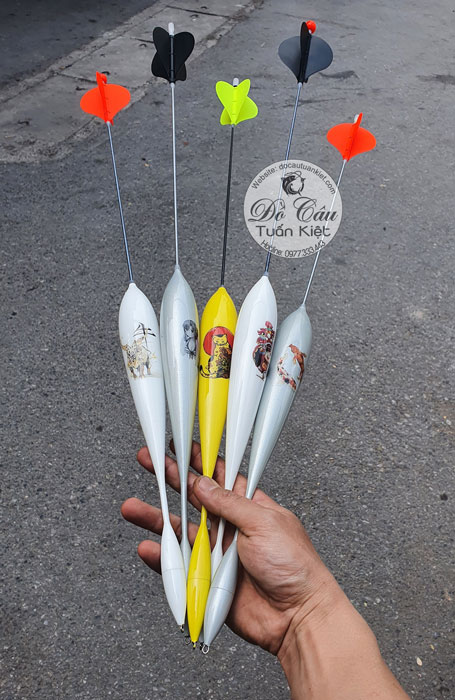
Offshore float fishing, wave-resistant
b. Night fishing floats
Night floats have a similar design to day floats. The only difference between day and night floats is that the night version has a float body fitted with a battery and a light bulb.

However, to minimise costs, the majority of anglers now use a two-spout float suitable for both day and night fishing. This type consists of two spouts: one for night fishing and one for day fishing.
4. Low-cost six-line fishing floats
Affordable six-section floats: a smart choice not to be missed
Alongside fishing rods and reels, six-section floats are a popular choice amongst many anglers. Currently, affordable six-point floats are widely available at varying prices. However, you should exercise caution when purchasing affordable six-point floats, as cheap does not necessarily mean good. To avoid wasting money on poor-quality products, you should choose a reputable supplier of six-point floats.
5. Where should you buy six-hole fishing floats?
Finding a reputable supplier of six-hook floats is no easy task. That is why, in this article, we’d like to recommend a supplier with a long-standing reputation and trusted by anglers: Tuấn Kiệt Fishing Tackle.
No. 2, Lane 158 Nguyễn Khánh Toàn, Cầu Giấy, Hanoi
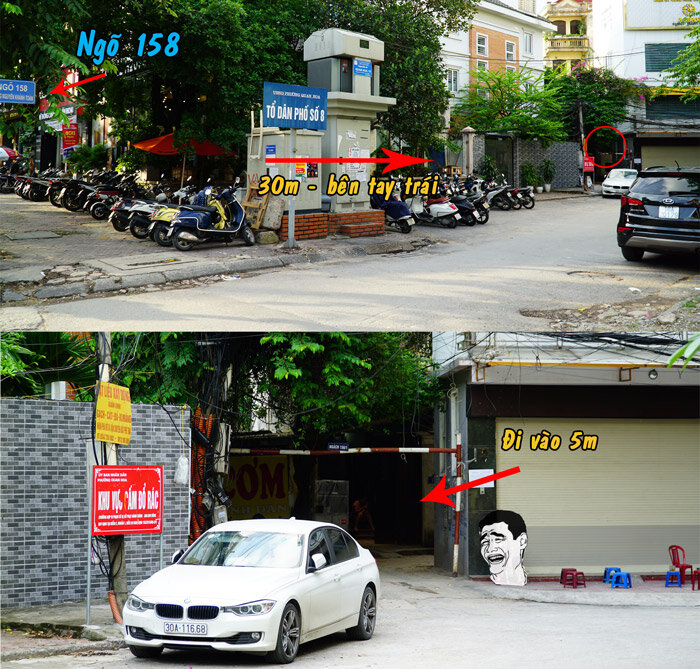
With many years’ experience in the fishing tackle sector, docautuankiet.com is confident in providing customers with high-quality products. Furthermore, Tuấn Kiệt Fishing Tackle offers extremely reasonable prices. All fishing floats sold by docautuankiet.com have a clear origin and provenance.
Buy fishing tackle from the Tuấn Kiệt shop on Shopee:


