



.png)
.png)


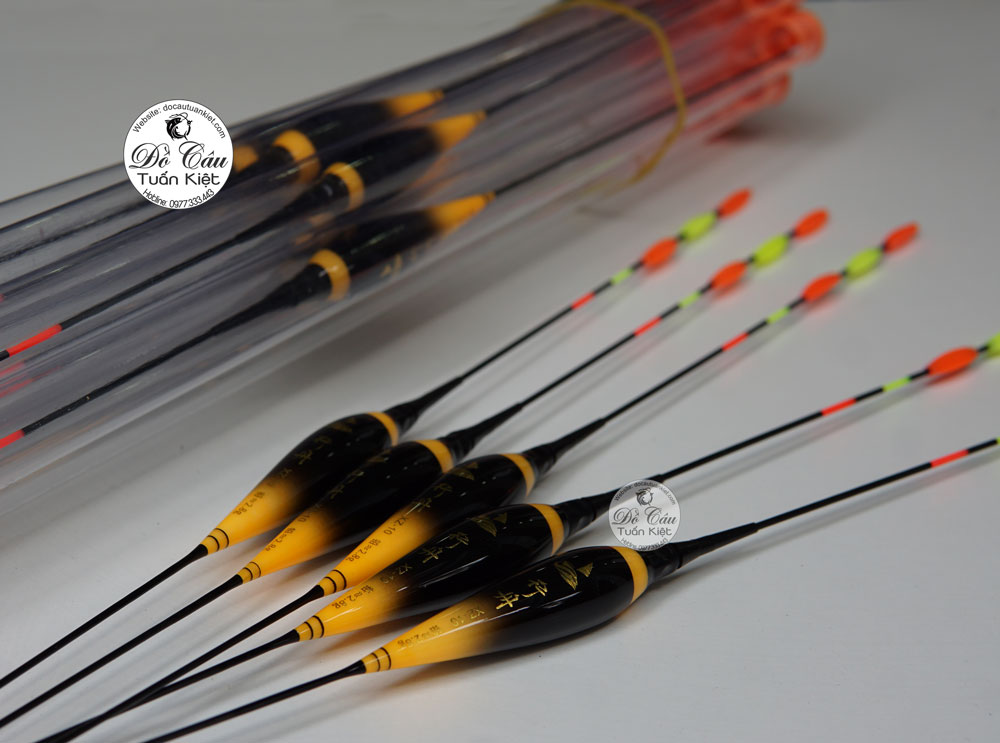


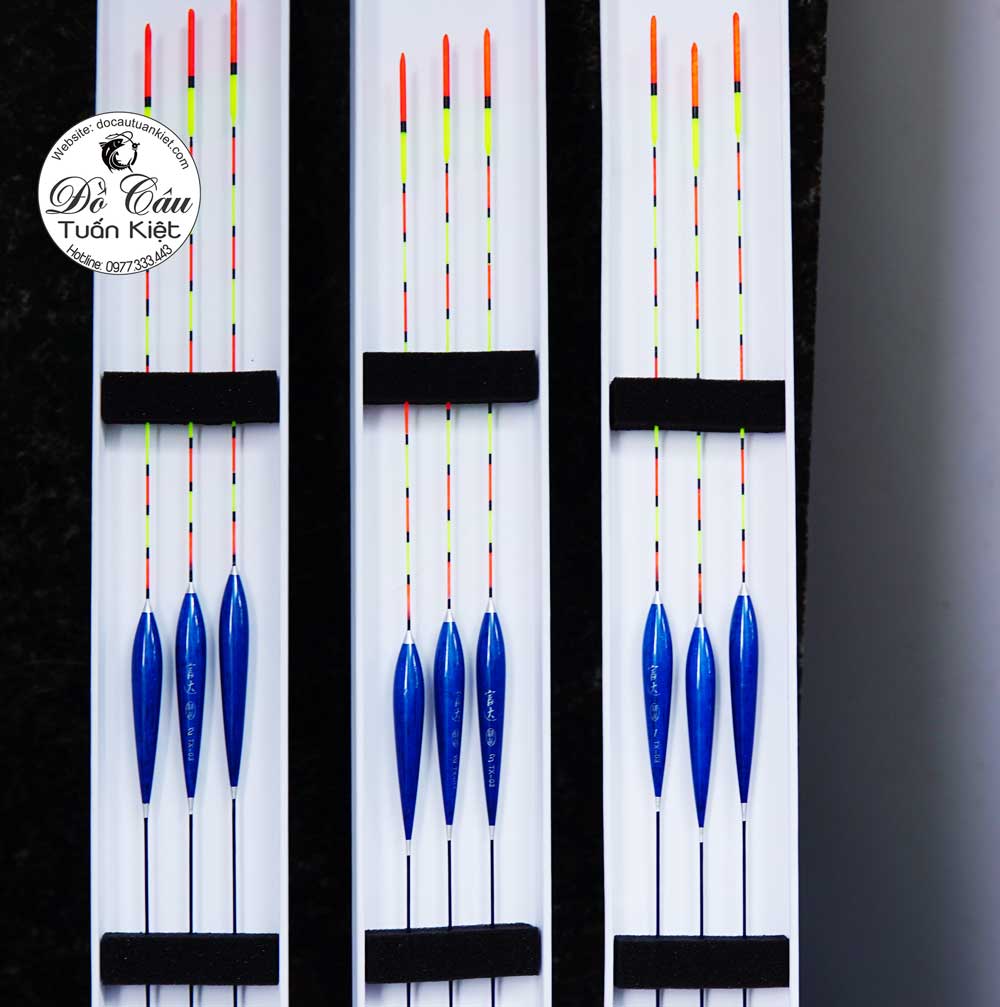


The Most Common Types of Fishing Floats Today
There are 2 common ways to classify fishing floats: by fishing method and by type of fish.
1. Classification of Fishing Floats by Fishing Method
In terms of fishing methods, there are mainly 2 types of fishing floats:
- Day Fishing Floats: These are floats used for fishing during the daytime, including types such as six-hook fishing floats for close-range fishing and six-hook fishing floats for long-distance fishing. Close-range six-hook fishing floats have a small float body with only 2 functions: signaling and reducing the effects of waves. Long-distance six-hook fishing floats also help keep the hook rig upright when striking, and have a much larger float body.
- Night Fishing Floats: Night fishing floats currently include floats with built-in lights, daytime floats with an additional light stick, and floats suitable for both day and night fishing. Night fishing floats with built-in lights are the best option, but they are slightly more expensive.
In more detail, there are:
- Six-Hook Fishing Floats: These are specially designed for six-hook fishing. They can be further divided into types such as day-and-night six-hook fishing floats, close-range six-hook fishing floats, long-distance six-hook fishing floats, wave-resistant close-range six-hook fishing floats, and buoyant six-hook fishing floats…
- Pole Fishing Floats: These floats can also be divided into smaller types, such as night pole fishing floats and wave-resistant pole fishing floats…
2. Day Fishing Floats
a. Close-Range Six-Hook Fishing Floats
Close-range six-hook fishing floats have a small float body and are mainly used to signal fish bites and reduce the effects of waves. This type of float has a small top because it is used for close-range fishing, and the float is painted with several reflective colors for better visibility.
To reduce wind resistance when striking, the float body is made slimmer and slightly larger so that additional lead weights can be attached to the bottom of the float. This helps stabilize the float when affected by waves and wind. The top of the float is made in a small oval shape.
When fishing in a flat, open lake without weeds, you should use a wave-resistant float with a slim stem. The stem can be up to 30 cm long, while the total length of the float can reach 40 cm.
b. Long-Distance Six-Hook Fishing Floats
Long-distance six-hook fishing floats also help signal fish bites and reduce the effects of waves. They additionally help keep the hook rig upright when striking. The float body is much larger, allowing the bait and hook rig to be cast farther and providing better resistance to waves than close-range six-hook fishing floats.
Because the float body of a long-distance six-hook fishing float is very large, additional lead weights are attached to the bottom of the float. If the float is too heavy and sinks, some lead must be removed. If it is too light and floats too high, more lead should be added.
The large float body helps eliminate false bite signals caused by small fish. You only need to strike when a large fish takes the bait.
When fishing at a long distance, it is easier to detect fish taking the bait than when using a close-range float.
3. Night Fishing Floats
Night fishing floats are specially designed for fishing at night. A characteristic of night fishing floats is that they are equipped with lighting devices such as battery-powered lights, light sticks, or LED lights. Depending on their needs and budget, anglers can choose a suitable lighting device.
The reason night fishing floats need additional lighting devices is that, when fishing at night, the low light makes it difficult for anglers to observe signals indicating that a fish has taken the bait. Lighting devices help anglers see the signals more clearly and strike quickly when a fish bites.
a. What Are Glow Fishing Floats?
Glow fishing floats are essentially night fishing floats equipped with a glowing light stick. Glow fishing floats usually emit a green light when used for night fishing.
The advantage of glow fishing floats is that they are cheaper than night fishing floats with battery-powered lights.
However, a minor disadvantage is that the light is not very bright.
4. What Do You Know About Long-Distance Fishing Floats?
Long-distance fishing floats are specially designed for fishing at long distances. They are characterized by good resistance to waves and extremely high buoyancy.
When choosing a long-distance fishing float, you should choose one with a threaded brass weight. This type of weight can be easily added or removed when balancing the float.
When choosing a long-distance fishing float, you should pay attention to the float body. The float body must be balanced according to the type of hook rig being used. The larger the float body, the heavier the long-distance fishing float. The diameter of the float body can sometimes reach 5 cm.
5. How to Make a Fishing Float
Making a fishing float is not difficult. Most fishing floats have similar dimensions. In general, making a fishing float consists of the following 5 steps:
- Step 1: Make the float body
- Step 2: Wrap protective thread around the float
- Step 3: Make the float stem
- Step 4: Polish the float
- Step 5: Dry the float thoroughly
Each type of fishing float may have some differences in the individual steps. In this article, we will provide detailed instructions on how to make a highly economical LED fishing float for anglers.
For more details on how to make a fishing float, click here.
6. Advantages of LED Light-Up Fishing Floats and How to Make Them
1. Advantages of LED Light-Up Fishing Floats
Light-up fishing floats are floats that can emit light while fishing. LED light-up fishing floats are especially popular among anglers because they offer many advantages, such as:
- If you make an LED light-up fishing float yourself using an existing fishing float, you only need to spend an additional 10,000 VND on a battery, battery holder, and LED light.
- Although inexpensive, LED light-up fishing floats are much brighter than fluorescent lights.
- In addition, LED light-up fishing floats are available in a wide variety of colors, from red and yellow to green and purple.
- With just one small battery, an LED light-up fishing float can operate continuously for up to 30 hours.
How to Make an LED Light-Up Fishing Float
Materials:
To make an LED light-up fishing float, you need:
- Fishing float
- LED light
- Battery holder
- Battery
- Heat-shrink tubing
- Soldering iron and solder
How to Make a Light-Up Fishing Float
- First, bend the legs of the LED light.
- Next, solder the LED light to the battery holder. Make sure to solder the correct polarity. If possible, add a resistor of about 200 – 500 Ohms to make the light brighter and last longer.
- When soldering, keep the two LED legs parallel and longer than the battery. Then cover them with heat-shrink tubing to prevent them from scratching the rod when wrapped.
- Next, wrap nylon thread around the top of the fishing float. This makes the LED attachment tighter and prevents the rod from being scratched.
- Then wrap the LED light around the top of the fishing float using nylon thread.
- Remember to check the brightness of the light before fishing. If it is not bright enough, adjust the resistor value accordingly.
- This method of making an LED light-up fishing float will certainly be very helpful for anglers when fishing at night.
7. Learn About Tilapia Fishing Floats
Tilapia build nests when they mature, so tilapia fishing floats are designed for this type of fishing.
Tilapia fishing floats are divided into 3 main types:
- Short-range tilapia fishing floats for distances under 20 m
- Medium-range tilapia fishing floats for distances of 25 – 30 m
- Long-range tilapia fishing floats for distances of 40 m or more.
A characteristic of tilapia fishing floats is that the lead is always heavier than the float, and the lead weight is always positioned near the hook.
When making a tilapia fishing float, proper float balancing is extremely important. You need to balance the float so that when the lead touches the bottom, the float just remains above the water surface.
A tip for beginners is to adjust the lead attached to the float so that, when placed in the water, the float sinks to the middle of the float body, with the upper half of the body and the tip remaining above the water. If only the tip remains above the water, it means there is too much lead, so simply remove some of it.
8. How to Choose the Right Fishing Float for Carp
Carp are very cautious fish, so when choosing a carp fishing float, you should pay attention to the following factors:
- Float stem: Choose a carp fishing float with a long, slim stem made of metal. The advantage of this type of stem is its high stability and low sensitivity to wind. In addition, carp fishing floats with metal stems are usually heavier and provide very clear bite signals.
- Float body: For carp fishing, you should choose a wedge-shaped float body with a slightly wider top that gradually tapers toward the bottom. This type of float body moves smoothly up and down and is less affected by water. Suitable materials for the float body include reed, balsa wood, or peacock feather.
- Float bottom stem: For carp fishing floats, you should choose a long bottom stem. Carbon or metal is the most suitable material. These materials help stabilize the float and reduce the effects of water, while also making fish bite signals clearer.
- Float length: The length of the float depends on the depth of the fishing spot. The deeper the fishing spot, the longer the float should be, and vice versa.
9. The Importance of a Fishing Float Case
Once you have purchased a fishing float you like, don't overlook a fishing float case. A fishing float case protects your floats from external impacts when they are not being used.
Fishing float cases are also quite inexpensive. With just a few tens of thousands of VND, you can get one for yourself.
10. The Importance of Properly Tying a Fishing Float
Once you have purchased a fishing float you like, you should also learn about how to tie a fishing float. Each type of fishing float has a different tying method. How you tie the fishing float can have a significant impact on your fishing results. If it is not tied correctly, it can be difficult to fish successfully.
11. Is It Worth Buying Cheap Fishing Floats?
Cheap fishing floats are not necessarily bad. If you know how to choose properly, an inexpensive fishing float can still perform its job well.
Whether a fishing float is cheap or not is not important. What matters is whether you have chosen the right type of fishing float for your needs.
The above provides all the basic information about fishing floats. Hopefully, it will be very helpful to anglers in their fishing journey.
