
How to make effective bait for Indian red and white carp for anglers

FEEDING HABITS
Feeding behaviour of the common carp
When preparing bait for carp, you need to be aware that carp are a rather shy species. Consequently, they are extremely cautious when taking bait. Furthermore, carp have different feeding requirements depending on their stage of development. Therefore, not just any type of bait will work for all situations.

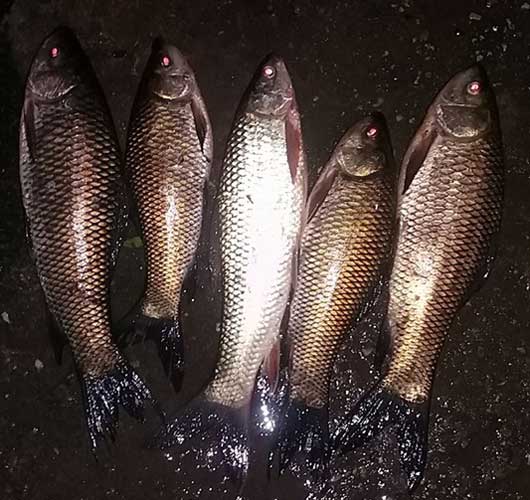
Two crucian carp landed, shared by angler Thanh Hải
Another characteristic is that the larger the carp, the smaller its gallbladder. For this reason, the most suitable bait for carp is highly fermented bait. The more the bait has fermented—to the point of near decomposition—the better. As their gallbladders are small, carp can only digest such food.
Carp also have similar feeding preferences to crucian carp; if you wish to fish for carp, please refer to the article on carp bait.
Fermenting bait for crucian carp
There are many ways to ferment bait for carp, but all must follow the principles of being sealed, kept cool and away from direct light.
When fermenting bait for carp, do not leave it exposed to prevent other organisms from getting in and spoiling the bait.
If left in a place that is too hot and sunny, the carp bait will spoil and will not ferment properly.
And here are the three key principles for fermenting carp bait that you must remember before you start making it.
MY OWN EXPERIENCE
Before moving on to the various methods for making carp bait described below, I’d like to share my own approach to making carp bait. I have fished for carp many times in my own lake; whilst I won’t go into detail about the more elaborate bait recipes described in the sections below, I usually prepare a simple, natural carp bait as follows:
I usually prepare:
- Sour rice: 1 small bowl
- Cassava flour (wheat flour – as it’s known in the central regions)
The method is as follows:
- Mix the cassava flour with water to form a thick, sticky paste
- Then wrap it in fresh banana leaves and place it in a wood-fired stove, burying it in the embers to cook
- Roast until cooked through and the leaf skin is slightly charred; the cassava flour should turn a golden colour and give off a fragrant aroma
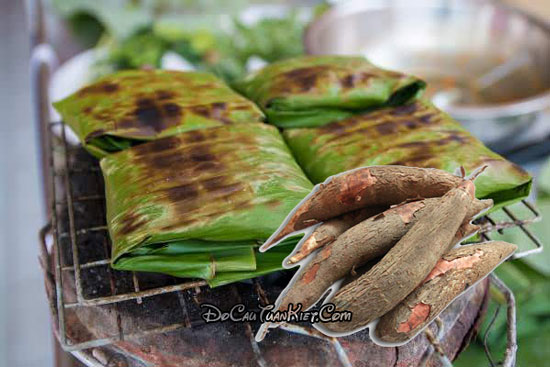
The fragrant, thick and chewy roasted cassava flour is used for fishing for carp
When fishing, proceed as follows:
- Drop the bowl of bait into the fishing spot, then go and have a cup of tea for 30 minutes
- Roll the roasted cassava into small balls with your fingertips, just the right size for the fish to eat
- Hook the bait onto the hook, cast it into the spot where you placed the bowl earlier, and wait
This is how I usually catch crucian carp in my local lake; it’s a simple method that I’ve found effective, and there are plenty of crucian carp in my lake. However, if your lake is large and the fish are sparse, try the methods below
BAIT FOR RED CARP
Red carp bait made from taro
To make red carp bait using this method, you’ll need the following ingredients:
- Taro: 2kg
- Soya bean flour: 1 small bowl
- Fresh soya sauce

Here’s how to make red carp bait using taro:
- Peel the taro and boil until tender. Then mash it until it is very smooth.
- Mix the soya bean flour and the mashed taro thoroughly. Make a hole in the centre of the mixture and add the fresh soya bean paste.
- Once mixed, shape into a ball
- Place the balls in a container, cover tightly and leave to ferment overnight before use.
Red carp bait made from jackfruit fibres
If you’ve just eaten jackfruit, you can put this ingredient to good use by making bait for red carp – it works very well.
Anglers will need to prepare the following ingredients:
- Jackfruit fibres
- Cold rice: 1 bowl
- Fresh fermented rice: ½ bowl
- Mung bean flour: 1 bowl
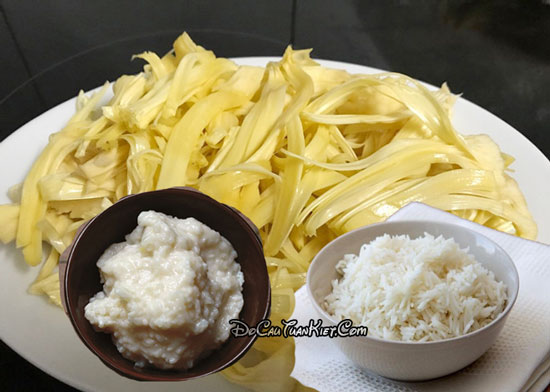
How to make bait for red carp using jackfruit fibre
- Finely chop the jackfruit fibres. If possible, put them in a food processor and blend until smooth.
- Mash the cold rice until smooth.
- Mix all the ingredients together thoroughly.
- Place the mixture in a plastic bag or plastic container, seal it tightly, and leave it to rest overnight; it will then be ready to take fishing.
BAIT FOR WHITE CARP
Making carp bait, particularly white carp bait, is by no means easy. But if you’ve got these two methods for making white carp bait under your belt, it becomes a piece of cake.
White carp bait made from fresh rice vermicelli
To make white carp bait using this method, please prepare the following ingredients:
- Fresh rice vermicelli: 1 kg
- Wheat flour: 0.5 kg
- Mung bean flour: 0.3kg
- Tomatoes: 100g. Choose tomatoes that are as ripe as possible
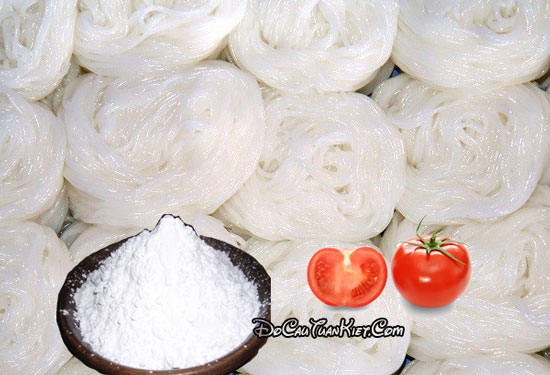
Here’s how to make bait for white carp using rice vermicelli:
- Slice the tomatoes and add them to the rice vermicelli, then knead until very smooth. Once these two ingredients are well combined, add the plain flour and mung bean flour and mix thoroughly.
- Place the mixture in a plastic bag or container, seal it tightly, and leave it to ferment for one day and one night until it develops a sour smell; it is then ready for use.
- This white carp bait can be stored at room temperature for 7–10 days.
White carp bait made from beer dregs
The ingredients required to make white carp bait from beer lees are as follows:
- Beer lees: 5 kg
- Sweet potatoes: 1 kg
- Maize: 700g
- Rice: 500g
- Soya beans: 300g
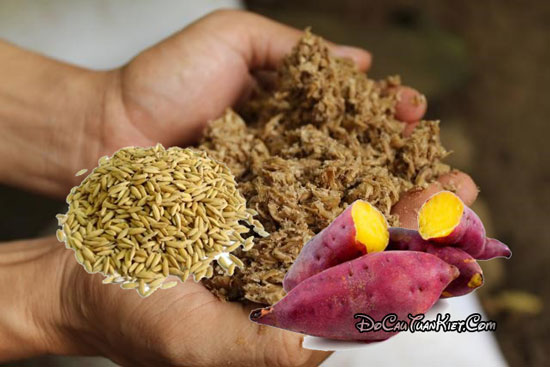
Here’s how to make bait for white carp using beer dregs:
- First, boil the sweet potatoes, then peel and mash them.
- Grind the soya beans into a fine powder.
- Grind the maize until it is very fine.
- Boil the rice until it just begins to split, then remove it from the water.
- Mix all the prepared ingredients together.
- Place the mixture in a bucket and press it down firmly with your hands.
- Seal the lid tightly and leave for 12 to 15 days until a white yeast film forms across the surface.
- If the bait has a pleasant, yeasty aroma, it’s ready to use for fishing for white carp.
NATURAL CARP BAIT
Natural carp bait made from snails
You simply need to prepare all these ingredients and you’ll be able to make natural carp bait from snails.
- Snails: 1 kg
- Binding agent: 1 teaspoon
- Soya bean flour: 1 rice spoon
- Uncooked rice: 1 small bowl
- Rice flour: 1 rice spoon
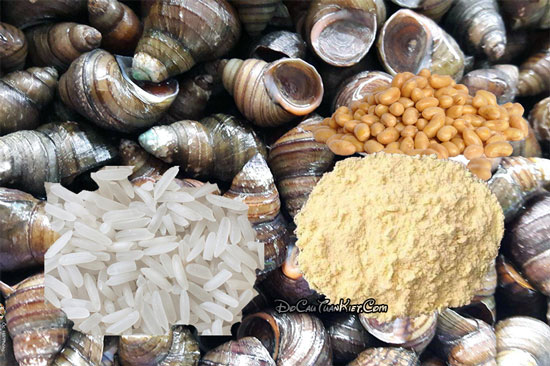
Detailed instructions on how to make natural carp bait from snails:
- Crush the snails as finely as possible
- Roast the rice until it is fragrant and slightly charred at the edges, then turn off the heat
- First, add the rice to the snails and mix thoroughly. Then add the remaining ingredients.
- Place the mixture in a container, cover tightly and leave to ferment for about 2 hours, then it is ready to use.
INDIAN CARP BAIT
Indian carp bait made from cold rice
Ingredients:
- Cold rice: 1 soup bowl
- Duck feed: 2 kg
- Duck eggs: 2

Here’s how to make this Indian carp bait:
- Hard-boil the duck eggs. Then peel them, mash them up and mix with cold water until the mixture has a consistency similar to thin porridge. Place the mashed eggs in an airtight container and leave to ferment for about 4 days.
- When you go fishing, mix the fermented eggs with the cold rice and duck feed. If the mixture seems dry whilst mixing, add a little pond water until it becomes pliable.
- Leave the mixture to rest for 15 minutes before taking it out to fish.
Bait for Indian carp using fresh pig’s blood
Making bait for Indian carp from fresh pig’s blood is a bit of a faff, but it guarantees an extremely high success rate, lads.
Please prepare the following ingredients:
- Fresh pig’s blood: 500ml
- Popped maize: 400g
- Garlic: 100g (preferably local garlic, as it gives off a lovely aroma)
- Probio digestive enzymes: 2 sachets (these are readily available at chemists)

Here’s how to make Indian carp bait from fresh pig’s blood:
- Crush and finely chop the garlic.
- Mix all the ingredients together, then place in an airtight container.
- Leave the mixture to ferment overnight until the surface of the container bulges slightly, at which point transfer it to the freezer compartment of the fridge.
- Set the freezer temperature to between 18 and 20°C.
- Leave the mixture in the fridge for 4 days.
- Before going fishing, open the container to check the bait. If the surface of the bait is dark brown with a fresh pink colour underneath, accompanied by a faintly sour and fragrant aroma, it is ready.
- When you go fishing, mix the bait with a little rice bran to make it stickier and thicker. This is necessary so that when cast into the water, the bait will take longer to break down.
EXTREMELY SENSITIVE BAIT FOR CARP
Bait for carp made from snail shells
To make carp bait using this method, you will need the following ingredients:
- Snails: 1 kg
- Sprouted rice: 1 car bowl
- Maize flour: 300g
- Red sweet potato: 300g
- Birdseed: 1 packet
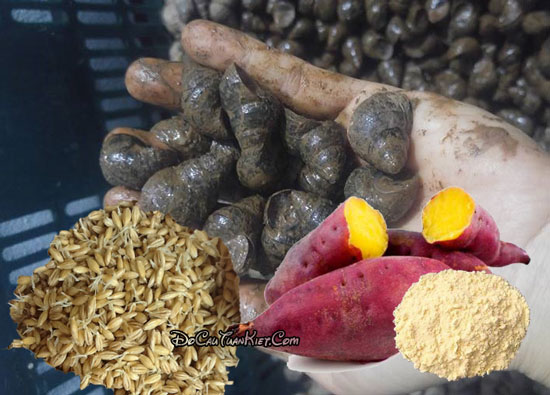
Technical instructions for making a float fishing bait using snails:
- Grind the snails until they are finely crushed.
- Peel the sweet potatoes and boil them until tender. Then dice them into small cubes.
- Mix all the ingredients together.
- Place the mixture in a plastic container, seal the lid tightly and leave to ferment overnight; it will then be ready for fishing.
Sweetwater carp bait made from sweet potato and sweetcorn
The ingredients required to make sweetcorn-based carp bait consist of two parts:
- Ingredients for the compressed bait:
- Maize kernels: 2 kg
- Soya beans: 1 kg
- Rice: 1 kg
- Sweet potato: 1 kg (choose the softest variety possible)

Ingredients to mix into the bait when fishing
- Popped maize: 1.5 small bowls
- Sprouted rice: 2 small bowls
- Snails: 2 kg
- Roasted rice: 200g
- Corn flakes: 2 kg
The technique for making corn bait for carp is as follows: to make this type of bait, you should carry out the process in two steps
a. Making compressed bait
Wash the maize kernels thoroughly, then soak them for about half a day. Once the maize has finished soaking, steam it (or alternatively, you can boil it). Cook the maize until the kernels have puffed up and feel soft when squeezed by hand.
Pour the maize into a colander to drain. To cool the maize quickly, use a fan to blow air over it. Once the maize is completely dry, place it in a plastic container and seal the lid tightly. Leave the maize to ferment for three days and three nights. After 3 days, open the container to check; it should have a fragrant corn aroma with a faint sour note from the fermentation.
One important thing to remember is that during fermentation, the maize will generate heat and gas; therefore, you must wipe the lid and the inside and outside of the container three to four times a day to ensure no water droplets fall onto the maize. If the maize gets wet, the fermentation process will fail completely.
Roast the soya beans until they are golden and fragrant, then grind them into a fine powder. Roast the rice thoroughly until it turns a deep golden colour, then grind it into a very fine powder.
Peel the sweet potatoes, then boil them until cooked through and leave them to cool completely.
Mix the fermented maize with all the prepared ingredients.
At this stage, you will have a mixture that is both fragrant and sweet. Please note that once mixed, the mixture must be dry and loose to meet the standard. Place the mixture into a barrel and press it down firmly with a ladle. Seal the barrel tightly and leave it to ferment for 3 to 4 days. Afterwards, open the container to check; if there is a layer of white mould on the surface of the mixture, it has been successful. Just as with fermenting maize, when fermenting the mixture, you must wipe the lid and the inside and outside of the container 3 to 4 times a day to ensure no water droplets fall onto the mixture.
b. Mixing the bait for fishing
Whilst the bait is fermenting, prepare the corn flakes as follows:
- Wash the corn kernels thoroughly and remove any husks.
- Boil the maize, taking care to stir continuously until it reaches a porridge-like consistency.
- Leave the maize to cool naturally in the pan until it sets into a firm block.
- Next, transfer the solidified corn onto a tray and use your hands to crumble it until it is very loose.
- Whilst breaking up the corn, use a fan to blow on it to ensure it dries completely.
- Continue fanning until the maize is completely dry, as any remaining moisture will cause the bait to spoil easily during fermentation.
Before going fishing, mix the compressed rice flour with the remaining ingredients in the following proportions:
"3 bowls of compressed bait + 2 bowls of sprouted rice + 1.5 bowls of flaked maize + 2kg of snails + 200g of roasted rice + 500g of maize flakes"
As the compressed bait can be used gradually, the longer you leave it to ferment, the more broken maize kernels you should add. Mix all the ingredients thoroughly before taking them fishing, and the crucian carp won’t stand a chance.
LANCER BAIT FOR CARP
To make this lancer bait for crucian carp, you’ll need the following ingredients:
Ingredients:
- S1 fishing bait: ½ packet
- Rice bran: 1 packet
- Rice bran: 1kg
- Coconut milk: 100ml
- Artificial banana flavouring: 1 bottle
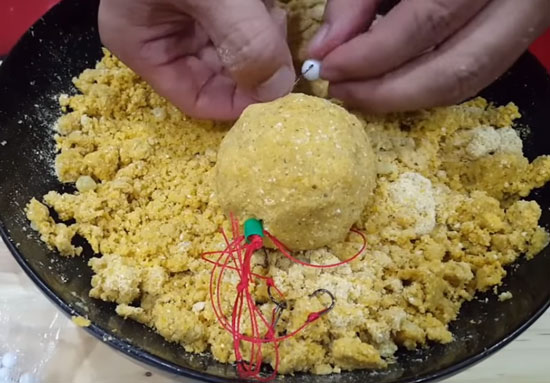
The method for making lancer bait for carp is as follows:
- Mix the rice bran, bait and glutinous rice bran together and set aside.
- Then, take another bowl and pour the coconut milk and banana flavouring into it.
- Step 3: Mix the two mixtures together. And there you have it – you’re now ready to use this bait for carp fishing, everyone.
BAIT FOR CARP WITH A SIX-HOOK LURE
The ingredients you’ll need to make bait for catching catfish are as follows:
- Sweet potato: 1 kg
- Cornflour: 200g
- Beer lees: 200g

The method for making green-tongued carp bait is as follows:
- Peel the sweet potatoes, boil them, then mash them until very smooth.
- Add the cornflour to the sweet potato. If the mixture seems too dry, you can add a little water to make it pliable.
- Finally, add the brewers’ grains and mix thoroughly.
- Leave the mixture to mature in a sealed plastic container for 10 days, after which it is ready for use.
The above covers all the recipes for carp bait, red carp bait, how to make lancer bait for carp, white carp bait, natural carp bait and Indian carp bait that I have learnt and distilled from my own fishing experience. I hope you all return from your carp fishing trips with great success, using the bait-making tips outlined above.
Buy fishing tackle at Tuấn Kiệt’s shop on Shopee:


