
What is lure fishing? Choosing the right rod and lure

Are you an angler? Do you always want to catch fish every time you take your rod out of the house? Do you have a passion for fishing and regard it as your favourite sport? Well, have you got the right fishing tackle ready? Allow us to introduce you to lure fishing, a style that has long been a favourite amongst anglers.
What is lure fishing?
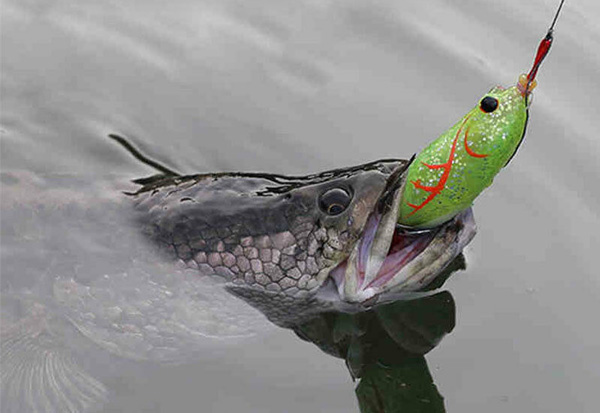
Lure fishing is essentially a method that mainly involves trolling on the water’s surface; whilst you can also fish the bottom, this is generally less effective. Lure fishing involves using artificial lures to catch fish. With this method, the artificial lure moves just like the real thing, causing the fish to mistake it for live bait and strike.
Simple yet effective lure fishing techniques
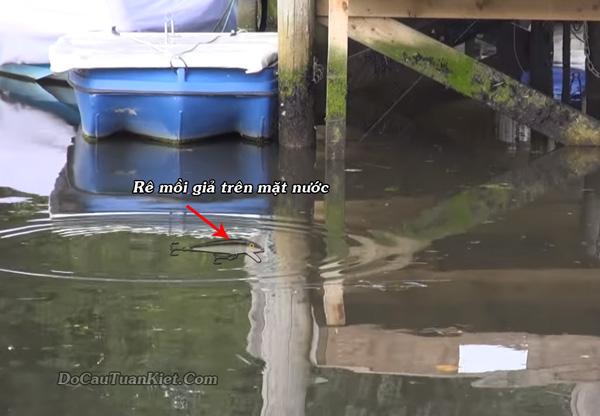
The technique of retrieving the lure is the core of lure fishing. Anglers must always hold the rod in their hand to retrieve the lure across the water’s surface. This method requires the angler to skilfully retrieve the artificial bait over a distance ranging from five to ten metres to several dozen metres, mimicking the way natural prey swim in the water or skim across the surface.
For this reason, the lure angler must stand firmly, with the knee of their front leg resting against the rod butt, whilst their right hand holds the rod to guide the lure rhythmically from left to right or from a distance towards them. Furthermore, to prevent hand fatigue during prolonged fishing and ensure the angler’s experience is not compromised, a lure rod used for lure fishing must, first and foremost, be lightweight. At that moment, the fish, lying in wait beneath the water’s surface, suddenly spot a lure nearby, drifting leisurely through the current, and immediately dart forward to strike. At this point, the fish will be easily hooked; when you hear a ‘snap’, meaning the fish has taken the lure, you should jerk the rod to land the fish.
By now, many of you are probably wondering: what sort of fish can you catch with lure fishing? What type of line should you use? And what are the most suitable lures?
Lure fishing is an active style of fishing for those who enjoy the thrill of catching fish such as snakehead, western snakehead, snakehead catfish, and field snakehead...
Snakehead fish are known for having very sharp and strong teeth, so you do not need to use a metal leader (as Vietnamese anglers often do with cable line), because snakeheads rarely bite the artificial lure and end up hitting the leader. All you need is 60 cm of high-quality fluorocarbon leader; this line is both elastic – so as not to hinder the lure’s ability to attract fish – and stiff enough to minimise tangles. Furthermore, its colour is nearly identical to that of water, making it virtually ‘invisible’ in clear water.
To select lures with the appropriate weight and diving depth, anglers need to understand the characteristics of the fish species, their spawning seasons, migration patterns, habitat preferences and the fishing terrain.
Depending on the purpose of the fishing trip, anglers should use a variety of different lures. Each species of fish has a preferred type of lure as well as a preferred lure size. Therefore, you should first identify the species of fish you wish to catch in order to select the appropriate lure.
Choosing artificial lures
Here are a few suggestions for suitable lures: using a duck-shaped lure for snakehead, using a frog-shaped lure for snakehead, etc.

Among these, the lure’s sinking rate is considered a key factor when selecting artificial lures. There are three basic types: floating, mid-water and sinking, depending on the specific terrain:
* Terrain with plenty of weeds, thickets, bushes or seaweed on the riverbed: You should use lures with snag-resistant hooks (such as Weedless hooks) or floating lures (surface).
* Open terrain: Lures with a diving depth of 30 cm to 120 cm should be used for maximum effectiveness.
* Deep water: Use sinking lures or deep-diving lures for the best results.
Most anglers tend to choose open areas with few obstacles for fishing, but you can fish with confidence even in areas with dense vegetation or lotus ponds, as artificial lures are designed to be highly snag-resistant.
When it comes to lure rods, anglers can choose between two types: vertical spinning rods and horizontal spinning rods.
Some good lure rods
Here are a few of the best lure rods for your consideration:
Hunting Black Super-Power Rod: this lure rod is specifically designed for lure fishing and can handle fish weighing between 5 kg and 10 kg. It comes in four lengths – 2.1m, 2.4m, 2.7m and 3m – making it suitable for all fishing terrains, from small to large lakes. Furthermore, it comes in two action types: H and MH. The rod is extremely lightweight, weighing just 160g, so anglers needn’t worry about tired hands whilst fishing!
Fishing Of Catch lure rod: This lure rod is made from durable carbon fibre and comes in three lengths – 1.8m, 2.1m and 2.4m – each divided into two sections. With two action ratings (M and ML), there are plenty of options to choose from. The rod weighs just 128g and has a fish-handling capacity of 5–7kg.

A small tip for you all – a common difficulty many people face with lure fishing is knowing how to rig the lure onto the hook. To ensure the fish feels no pain when it takes the bait, the artificial bait must be hooked in such a way that the sharp tip of the hook is concealed; only then will the fish feel safe enough to take the bait fully into its mouth. By the time it feels any pain, the hook will already have pierced the fish’s lip.
These are some tips on lure fishing; I hope anglers make sensible choices and achieve great results!
Buy fishing tackle at Tuấn Kiệt’s shop on Shopee:


