
Some tips on effective sea fishing

However, sea fishing is quite different from the freshwater fishing you’re used to. That’s why, in this article, we’ll be sharing some effective sea fishing tips for you to consider.
Of course, whilst experience plays a part, it must be said that catching fish is also down to luck; there are days when you sit with your rod out for hours without catching a single fish, but there are other times when you’ve barely cast your line before you’ve already hooked two or three.
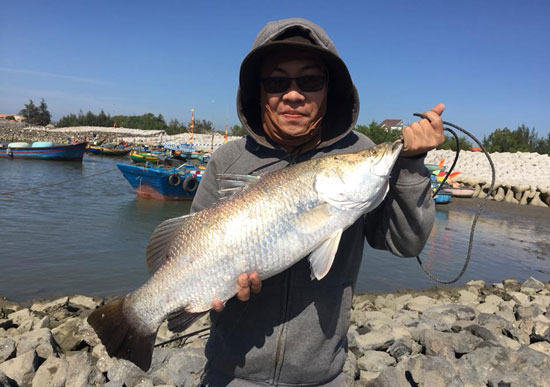
Insights from angler Tran Trong Thang
Below are some tips on choosing bait, types of fishing rods and accessories such as hooks and line, as well as the best times to go sea fishing.
1. Effective sea fishing bait
Firstly, you should clearly identify the type of fish you want to catch and your fishing spot, as different locations will have different species of fish. In areas close to the shore, you’ll commonly encounter fish such as sand whiting and croaker. To catch these species, live bait or artificial lures such as small fish or plastic shrimp will be your primary choice.
In rocky areas, species such as grouper, red snapper and sea bream are widely distributed. To catch these fish, the main baits are various types of prawns, small squid, fingernail snails, and a mixture of dried prawns and roasted rice flour.
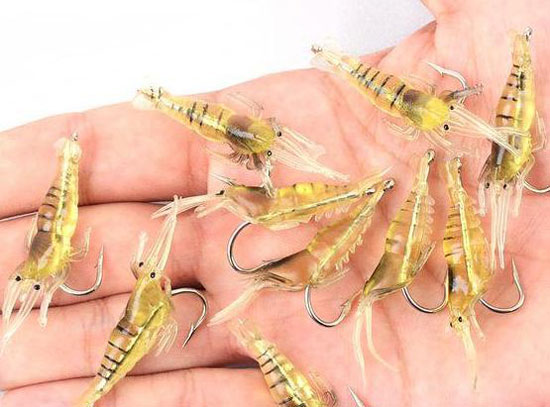
However, when sea fishing, you should opt for live bait or fresh fish and squid to achieve better results.
When hooking the bait to encourage a stronger bite, the bait must be securely attached to the hook; therefore, you should hook it in such a way that the hook is not exposed and the fish perceives the bait as still moving, as this will yield the best results.
2. What type of fishing line should you use for sea fishing?
If you wish to catch fish with sharp teeth, such as mackerel or barracuda, you should use fishing line with a metal core to minimise the risk of it being bitten through.
Furthermore, to prevent the line from twisting, you should attach a swivel to the end of the main line for added security. At the same time, after each fish is hooked, you must always check the first few metres of the line.

When fishing for cunning species, you should choose the thinnest or ‘invisible’ line to outwit them. If any section of the line is frayed, cut it off.
3. Choosing a sea fishing rod
The sea fishing rod plays a crucial role in every fishing trip and cannot be overlooked. Sea fish are usually very strong and quite heavy, so you should equip yourself with a sturdy, robust sea fishing rod that can withstand heavy loads and has a flexible bend. Choose a rod that suits the wave conditions and your fishing style. Holding the rod will be very difficult if you choose one that is too short or lacks sufficient strength.

Some criteria for choosing a sea fishing rod
- For offshore fishing, rods between 3 and 5 metres in length are generally recommended
- The length of the rod depends on how far or close you are fishing (where you cast your bait)
- If you wish to fish at a distance of around 60 metres, you can use a 3-metre rod
- The reel used with these rods is a spinning reel
- For large fish, use a stiff rod; for smaller fish, use a flexible rod
- Most manufacturers use the following standards – Ultra-Light (UL), Light (L), Medium-Heavy (MH) or Heavy (H) – to indicate the rod’s flex
4. Time and location for fishing
A very important factor in your fishing trips is the time of day you fish, as this affects whether your session will be successful or not.
Fishing in the early morning and late afternoon is usually the most productive time. Many anglers also take the ebb and flow of the tide into account when choosing the best time to go fishing. The most productive time is approximately one to two hours after the tide has started to rise or fall, as this is when fish are most active in search of prey.
Spots close to the shore with few submerged rocks are likely the most ideal places for sea fishing, as these areas make it easier to catch both medium-sized and large fish. On the other hand, fishing far from the shore can be quite dangerous, especially when faced with high waves and strong winds, which can pose a serious risk to human life.
Buy fishing tackle at Tuấn Kiệt’s shop on Shopee:

