
Which Japanese fishing line is the best – ultra-durable and high-tensile strength?

Which fishing line is best?
There are hundreds of thousands of types of fishing line from various manufacturers on the market, but the best-known and most highly rated lines—as recognised by many users—are the ones introduced by Tuấn Kiệt Fishing below.
It is difficult to say which type of fishing line is the best, as this is a question you often hear in everyday life: ‘Which mobile phone is the best?’, ‘Which television is the best?’… Each product has its own advantages, and the choice depends on the user’s specific needs.
The best fishing lines from various manufacturers are broadly on a par in terms of breaking strength; it is rare for any one brand to stand out significantly, unless it is a new type of line that offers a notably higher breaking strength.
Many novice anglers, not yet fully understanding the issue, are constantly searching for the ‘best’ type of fishing line; they’ll choose whichever brand is most widely used, thinking that’s fine. However, whether the line breaks depends on the current, the choice of line thickness, and whether the terrain presents any obstacles.

Genuine Okamoto 4-Fish Fishing Line
Among the high-quality, ultra-durable fishing lines currently available, the following types are worth mentioning
a. Varivas Vermax fishing line
Varivas is a renowned Japanese fishing line manufacturer specialising in various types of fishing lines, including sea fishing lines exported to many major countries worldwide. The brand offers a wide range of fishing lines, but one that stands out is the Varivas Vermax, designed for offshore reel fishing (ISO fishing). As a result, the line is less prone to abrasion, has minimal stretch and is more durable; furthermore, it is very supple and has a high breaking strength.

Varivas Vermax Strong Fishing Line
The Varivas range includes several versions, such as: Varivas Vermax VLS (dark yellow), Varivas VA-G (lemon yellow) and Vermax Strong (translucent white).
Prices start from 295k per 150m spool, depending on the line’s thickness; purchase this fishing line here.
Whenever a product is popular, counterfeits inevitably appear; this line was once extremely well-known and was widely counterfeited at low prices. Currently, shops selling genuine products carry official seals from the Ministry of Public Security certifying their imported status. Actually, that’s not the main point; what matters is the brand. If customers have a good experience after buying it once, they’ll come back and recommend it to their friends, won’t they?
b. Okamoto 250m fishing line
Okamoto fishing line, or as it’s commonly known in Vietnam as ‘the four anchovies’ line’, is a line that can be described as good quality, good value for money and quite popular at present; however, there are currently many counterfeit and fake products from China on the market, priced from a few tens of thousands to around 120k per reel. Do you really think you can buy a roll of genuine Japanese line for just a few tens of thousands?
Tuấn Kiệt Fishing currently sells genuine Okamoto 250m fishing line for anglers practising bottom fishing, single-hook fishing, and lancer fishing... Genuine products from Japan at 215k per reel – at this price for 250m, it’s quite a bargain, isn’t it? The genuine products are exceptionally durable and more resilient than the counterfeit items currently on the market.
Genuine products are hard to come by on the market these days; unless you’re an ordinary consumer holding two genuine reels side by side, it’s difficult to tell the difference between the real thing and a counterfeit.
Buy fishing tackle at Tuấn Kiệt’s shop on Shopee:

Distinguishing genuine from counterfeit products

Some distinguishing features
- Regarding price, counterfeit products cost 120k or less, with many sellers offering them for 60k or 50k; genuine products cost 210k
- The colours on genuine products are printed sharply and clearly
- Genuine products always feature the word ‘OKAMOTO’ in seven shimmering colours, printed in a dotted, embossed pattern on the logo and label to prevent counterfeiting
- The Ministry of Public Security’s anti-counterfeit label features a 7-colour, shimmering print that is clearer and sharper than the counterfeit label (this is clearly visible when viewed at an angle)
- The Okamoto label (in the centre) on genuine products is silver-white and has a rounder cut. Counterfeit products have a yellow label with a rectangular cut
What are the advantages of the Okamoto 4-fish fishing line?
- Affordable price
- High load capacity
- One 250-metre reel is sufficient for two fishing rods
Disadvantages of the line
- Thick, stiff strands
- The line tends to twist more quickly in the reel than Varivas
- The line stretches more than Varivas
Please see the image below
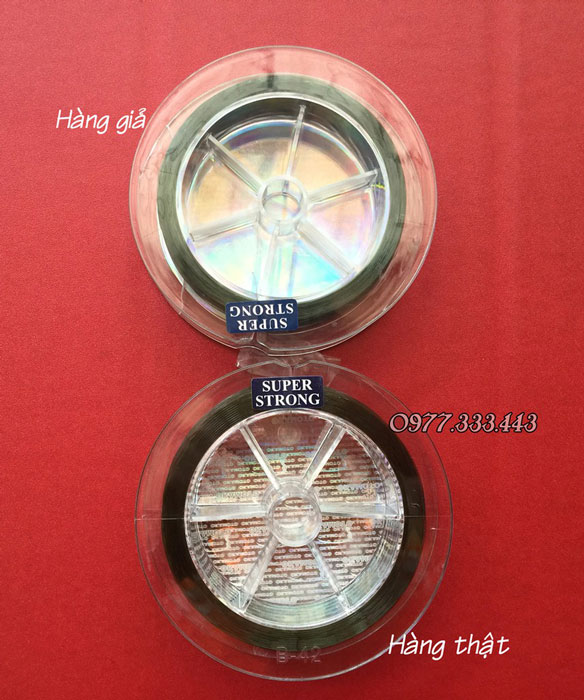
Some distinguishing features on the inside of the line spool
- On the inside of the spool, genuine products feature numerous embossed ‘Okamoto’ logos in seven shimmering colours to prevent counterfeiting
- The letters ‘B-42’ are printed on the upper rim of the spool’s plastic band
In some video clips shared by users on YouTube, it is claimed to be the genuine article, but this is not entirely accurate. We hope that the information shared above will help you purchase a genuine, high-quality product
To purchase this spool of fishing line for 215k, click here.
What is a fishing line spool?
Firstly, let us explain the concept of fishing line to you.
- Spool line is the line wound onto the reel, or the line running from the tip of the rod to the handle (reel seat).
- The line used to attach the hook (a length of 2–50 cm) is called a ‘link line’.
- Mainline is usually made of nylon or monofilament.
- Link line is made of fluorocarbon
Fishing line
When fishing, anglers often choose nylon monofilament line for the main line. This is the best type of fishing line for use as the main line.
This type of line has the advantage of high tensile strength. It has excellent elasticity. Monofilament nylon also has excellent resistance to abrasion.

Icon Camo fishing line was once famous in fly fishing
For platform fishing or bottom fishing, it depends on whether the angler prefers to use monofilament or braided line; for platform fishing, 99 per cent of anglers use monofilament as it is less likely to tangle and the line does not float like braided line. As for bottom fishing, anglers currently use both braided and monofilament lines
If you’re bottom fishing, here are some points to bear in mind when choosing nylon monofilament line:
- When selecting nylon monofilament line, you should opt for the thinnest possible diameter. The reason for choosing a thin line is that it offers minimal water resistance, allowing you to set the hook more quickly and easily.
- You should choose a smooth, supple type of nylon monofilament. The smoother and more supple the nylon monofilament, the further you can cast and the straighter the line will be. This helps anglers maintain their power when setting the hook. Furthermore, it helps minimise delayed hook-sets, which can cause the fish to escape.
- Always prioritise nylon monofilament lines with high abrasion resistance. You should choose this because the characteristic of bottom fishing involves the line running vertically through the float’s stem. If the abrasion resistance is low, the line is very likely to snap whilst fishing.
- Fishing lines that lack elasticity when setting the hook will wear out quickly, are not durable, and, moreover, will fail to secure the fish.
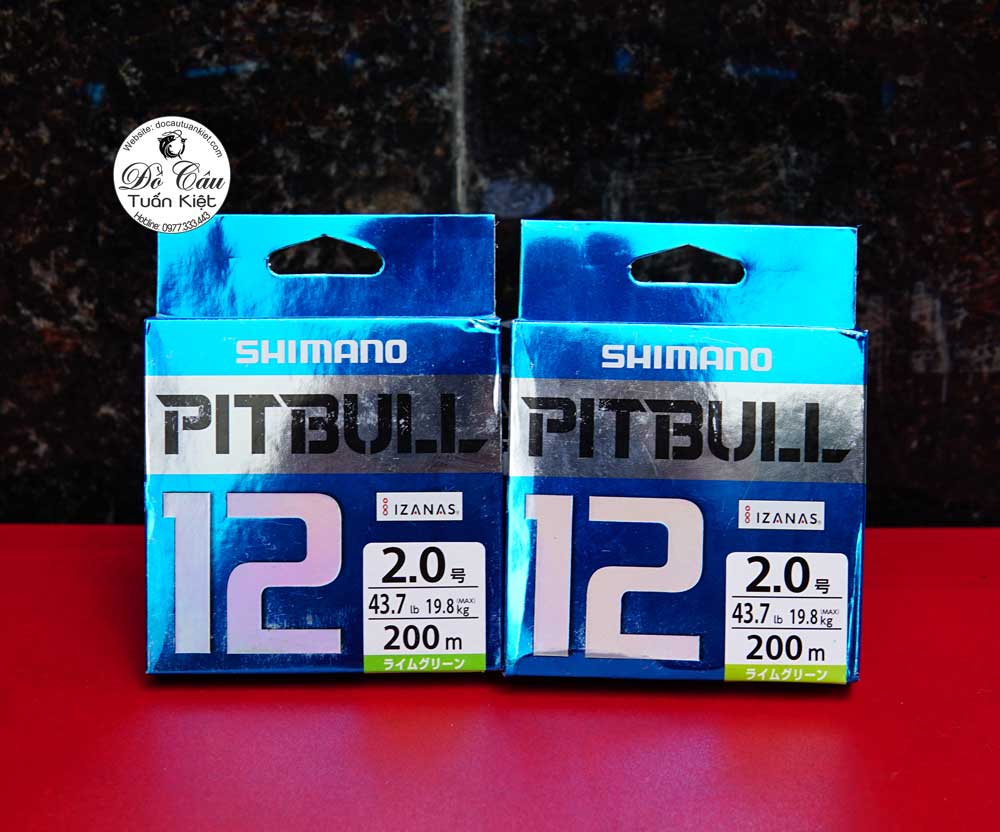
Some popular main lines for bottom fishing
- Sufix 131 Sinking Line
- Varivas Avani Jigging 10x10
- Shimano Pitbull monofilament
- Daiwa Satiga monofilament
- Shimano Ocea Jigger monofilament line
- Icon Camo monofilament line
- Varivas Vermax Strong monofilament line
- YGK G-Soul Upgrade PE X8 braided line
Fishing line for baitcasting
Fishing from a platform is the easiest discipline when it comes to choosing line; you can opt for the 4-fish monofilament line mentioned above as the spool is very long and the price is low (it could be described as good value for money), One spool lasts for 5–7 sessions before needing to be replaced; for greater durability, choose the Varivas Vermax Strong line mentioned above, or any other brand’s high-strength nylon monofilament line.
Some well-known types of fishing line for casting reels in Vietnam include
1. Qinglong fishing line
This is also a high-quality spool line highly recommended by the fishing community; it is used by many anglers and currently costs around 215k per 150m spool

Qinglong fishing line
According to the description, the line has the following characteristics:
- The line’s surface has numerous small dots that make it virtually invisible when submerged
- The line cuts through the water quickly when jerked
- It sinks rapidly
As for my personal choice, Ha Don would like to share his honest opinion: currently, there are far too many Chinese fishing lines and tackle on the Vietnamese market, fuelled by the rising popularity of platform fishing. However, this is not meant to be a biased judgement; Japanese products are still a cut above. Many might disagree with me, but the market is currently flooded with an overwhelming variety of Chinese goods, with different suppliers importing and advertising them under various brand names.
Once you try more advanced disciplines such as lure fishing or bottom fishing, you’ll realise that the quality of the monofilament lines, rods and so on is worlds apart from Japanese products.
The best lure fishing lines
Lure fishing is different; it requires very fine, high-tensile line, and it must also be supple and resistant to twisting when the angler is constantly casting and retrieving all day long. Therefore, PE monofilament line is the best choice for lure fishing.
Paracord with a very fine diameter is ideal for casting artificial lures further than monofilament; any paracord will do, but Japanese-made paracord has finer, smoother fibres and is more durable than Chinese-made versions.
1. Nobey or Toman PE braided line
This is a type of PE line from China at an affordable price of around 190k per reel. but the fibres are still quite thick (due to misleading diameter claims), so it’s less prone to snapping; the downside is that the coarse, thick fibres mean the lure won’t fly very far, so you should choose a lower line size (around 1.5).

Toman PE fishing line costs 190k per reel; click here to buy.
2. Bulava Winmax Pro 2022 monofilament
Like many other Japanese brands, Bulava’s PE line features blue fibres; the new 2022 version has been improved with much finer and smoother fibres compared to previous versions.

To purchase Bulava PE line for 360k, click here.
As the fibres of this line are finer than those of the Nobey or Toman lines mentioned above, lure anglers may wish to choose a 2.0 or 2.5 line to achieve the highest load capacity for their lure fishing.
2. Other Japanese braided lines
There are simply too many types of braided line to list here, so let’s highlight a few good options for lure fishing, such as
- Daiwa J Brajd X8 Dark Green 135m
- Varivas High Grade PE X8 line
- YGK G-Soul Upgrade PE X8 fishing line
- Shimano Kairiki fishing line
- Shimano Pitbull fishing line
- Varivas PE Varivas Max Power X8 Fishing Line
To view more options, please see our range of fishing lines here.
Choose a leader line
In fishing, the leader line acts as the line in direct contact with the fish. As the leader is tied directly to the hook, there is a special ‘invisible’ type of line designed to prevent the fish from being spooked – this is fluorocarbon line. The key feature of fluorocarbon leaders is that they are made of transparent white fibres which do not reflect light underwater, making them harder for fish to spot.
More specifically, what makes leader line special?
- Translucent white, non-reflective
- High abrasion resistance; less prone to scratches, abrasion from rocks, branches and thorns
- Stiff fibres that resist snagging and tangling better (particularly as a leader in lure fishing)
What are the characteristics of high-quality fluorocarbon leader line? Ha Don would like to share some ways to identify it
- Fluorocarbon line used as a leader is usually cut short; a spool of 15m, 50m or 60m is common
- Standard retail prices for commercial-grade fluorocarbon line are usually over 200,000 VND per spool; cheaper options are typically blended products
- When a fluorocarbon leader is held over a flame and rubbed between your fingers, it will turn to ash; if it were nylon, it would fray into strands
1. Daiwa Alpha Front link line
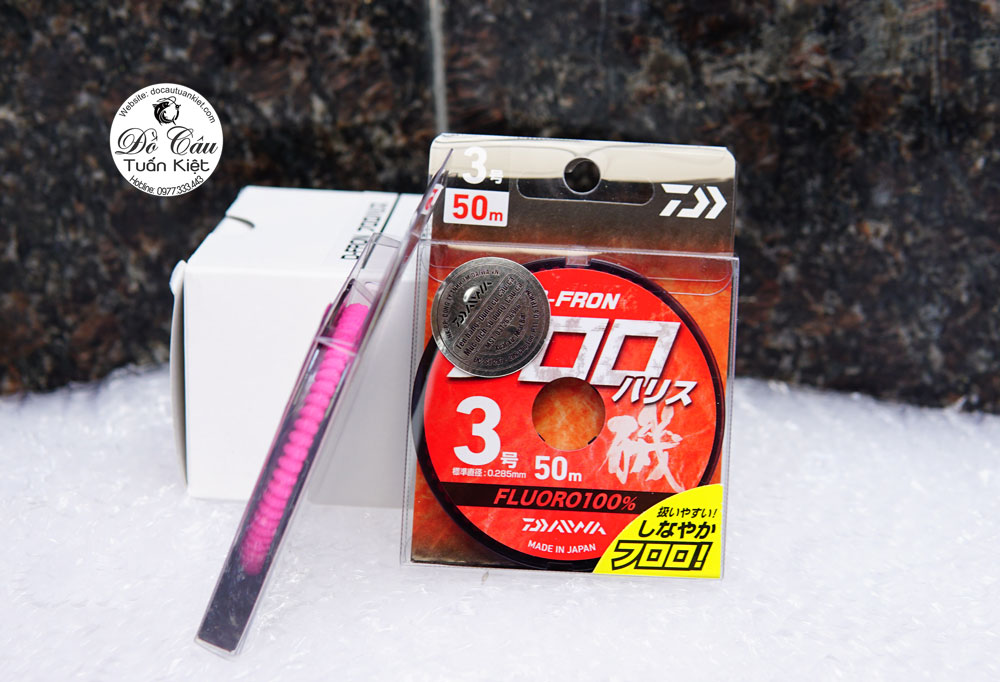
Genuine Daiwa link line
The shop currently stocks Daiwa monofilament in sizes 0.8, 1.2, 1.5, 1.75, 2.0, 2.5, 3.0 and 4.0, priced at 250,000 VND per 50-metre spool; to purchase, click here.
2. Japanese Extoray Link Fishing Line

Extoray link fishing line is priced at 280k per reel; click here to buy.
3. Varivas Seabas Shock Leader

Varivas Shock Leader lines are available in larger sizes from 5, 6, 7 and 8 upwards; they are commonly chosen by anglers for lure fishing. View here
A common feature of hook-tie lines is that they are made of fluorocarbon; in traditional fishing they are called ‘link lines’, in Taiwanese fishing they are called ‘théo lines’, and in lure fishing they are called ‘leaders’ – they are essentially the same, differing only in line size.
According to anglers, the leader is the line that bears the brunt of abrasion from the hooks. Not only that, but it is also the line that the fish can sense. Therefore, the best types of fishing line currently used by anglers for leaders are nylon, 100% fluorocarbon, or nylon coated with fluorocarbon. Each of these line types has its own distinct advantages and disadvantages.
- Nylon line’s key advantage is its high tensile strength and excellent elasticity. However, this type of line is not invisible. Furthermore, nylon line is not resistant to abrasion.
- 100 per cent fluorocarbon line: unlike nylon, this type is virtually invisible. Furthermore, it offers exceptional resistance to abrasion and is largely unaffected by mud and silt. However, it has the disadvantage of being significantly less strong than nylon.
- With increasingly advanced technology, manufacturers have introduced a range of fluocarbon-coated nylon lines. This type combines nylon with 100 per cent fluocarbon. Its construction consists of a nylon core covered with a fluocarbon coating. Consequently, this line is regarded as the best fishing line for making leader lines. Fluorocarbon-coated nylon line offers both excellent invisibility and high tensile strength. Furthermore, it exhibits high resistance to abrasion. Fluorocarbon-coated nylon line is very soft and smooth, so it is extremely unlikely to become tangled whilst fishing.
Now, let’s take a look at some of the best types of fishing line for use as leader line
- For nylon lines, you can choose: Trabuco T Force or Jaxon Crocodile Premium
- For 100 per cent fluorocarbon lines, there is the Jaxon Crocodile Fluorocarbon Coated or the Falcon Prestige Fluorocarbon Coated
- As for nylon lines coated with fluorocarbon, anglers often use Take Akashi Ultraclear Fluorocarbon or Take Filo Fluorocarbon Akashi
Where can you buy fishing line?
For those new to fishing who are unsure where to buy line, head straight to Tuấn Kiệt Fishing Tackle. We will advise you on the best fishing line for your needs, as well as how to rig it for maximum effectiveness.
Please visit the Tuấn Kiệt Fishing Tackle shop at the following address
No. 1, Alley 158 Nguyễn Khánh Toàn – Cầu Giấy – Hanoi (0977333443)
Buy fishing tackle from Tuấn Kiệt on Shopee:
